

Key Takeaways
- The lowest advertised rent does not always create the lowest overall occupancy cost.
- Customer access, employee commutes, parking, visibility, deliveries, and permitted use all matter.
- Businesses should verify zoning, flood exposure, insurance needs, and build-out requirements before committing.
- A practical location should support current operations while leaving room for growth and change.
Choosing a commercial location in Tampa is a business decision, not simply a real estate decision. The right property can improve customer convenience, reduce operating friction, support hiring, and make it easier to grow. The wrong one can create expensive problems involving access, permitting, parking, repairs, or lease restrictions.
For owners comparing sites across the area, Tampa, FL real estate agent Alan J. Kronenberg provides commercial real estate guidance through Alan Kronenberg’s Tampa-based website, including property search tools, strategic advisory services, and market information.
As a CCIM commercial advisor with experience involving industrial, retail, flex, medical office, and mixed-use properties across Central Florida, Alan Kronenberg can offer a useful local perspective when evaluating opportunities in Downtown Tampa, South Tampa, East Tampa, Ybor City, and nearby Pinellas County.
Why Location Decisions Matter More In 2026
Tampa’s business growth and ongoing redevelopment can create more competition for well-positioned commercial space. The city has also received recognition as a leading destination for corporate headquarters, according to the City of Tampa’s business headquarters report. That momentum can influence rents, traffic patterns, tenant mix, and customer expectations.
Growth does not make every available building a good fit. A redevelopment project may eventually increase demand, but it can also bring years of construction, altered access routes, or a different customer base. Every property should be evaluated against the company’s actual operating needs.
Start With The Business Model
Before touring spaces, define how the business works on a normal day. Consider whether customers walk in, schedule appointments, order online, or need to visit after regular work hours. Identify how many employees will be on-site, what equipment is required, and whether deliveries, service vans, storage, loading, outdoor work, or private offices are essential.
A medical practice may prioritize accessible entrances, patient parking, elevator access, and a calm, professional setting.
A contractor may place more value on warehouse depth, secured yard space, truck circulation, highway connections, and room for materials.
Matching the property to the business model early prevents wasted tours and poor comparisons.
Compare Tampa Submarkets Carefully
Tampa is not one single commercial market. Each submarket serves different customers, employees, and operating styles.
- Downtown Tampa: Often suits office users, professional services, hospitality, and businesses that benefit from urban visibility and nearby amenities.
- South Tampa: Can work well for neighborhood retail, medical practices, professional offices, and service businesses serving established residential areas.
- East Tampa: May be a practical option for industrial, warehouse, logistics, contractor, and value-conscious operations.
- Ybor City: Can appeal to restaurants, entertainment concepts, hospitality, and mixed-use businesses that benefit from destination traffic.
- Westshore: Offers a major office, retail, hotel, and transportation-oriented business district.
Compare areas based on customer profiles, nearby competition, parking supply, traffic flow, delivery access, asking rates, and planned construction. Local development coverage, including recent reporting on Tampa projects, can help business owners spot changes that may affect future demand.
Measure Access Beyond A Map
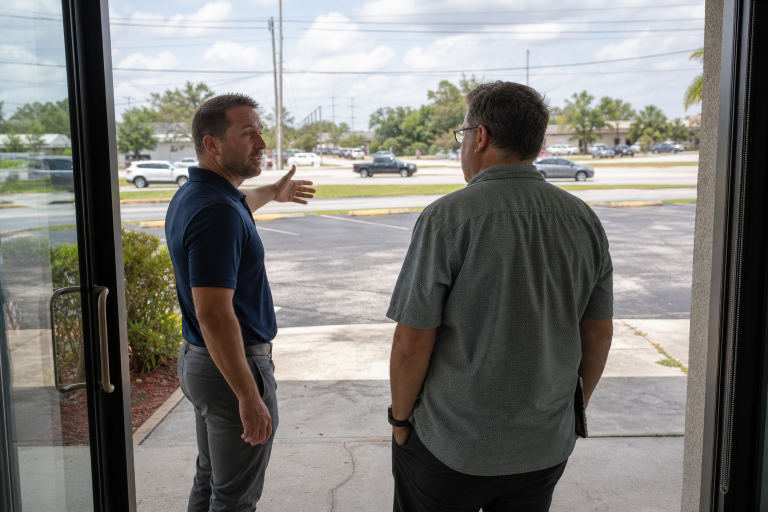
A site that appears close on a map may be frustrating to reach during rush hour, school pickup times, or major events. Visit each finalist property during morning, midday, and evening conditions. Approach from multiple directions and test the route a first-time customer would take.
- Check entrances, turning lanes, traffic lights, sidewalks, and public transit access.
- Count usable customer parking during busy periods, not only empty spaces during a quiet tour.
- Confirm that delivery vehicles, service vans, and emergency vehicles can enter and exit safely.
- Ask about nearby roadwork, construction, or access changes planned over the next two to three years.
Review Zoning And Property Rules
A former restaurant does not automatically qualify for every food concept, and a standard office building may not permit medical, fitness, education, assembly, or high-volume customer uses.
Before signing a lease or making a purchase offer, confirm the zoning classification, permitted and conditional uses, parking requirements, signage rules, outdoor storage limits, operating-hour restrictions, and permitting needs for renovations.
Get important use information in writing from the appropriate city or county department.
The landlord’s verbal assurance is not a substitute for verification. If the business depends on a specific approval, include appropriate due diligence and contingency language in the agreement.
Calculate The Full Occupancy Cost
Base rent or purchase price is only the starting point. Build a three-year estimate that includes:
- Common-area maintenance charges, property taxes, insurance, utilities, security, repairs, and maintenance.
- Build-out, permits, furniture, technology, moving costs, signage, and exterior improvements.
- Flood, wind, contents, and business interruption coverage, where applicable.
A higher-rent space can be the better financial choice if it needs less renovation, has reliable infrastructure, offers stronger access, or reduces staffing and energy costs. Compare total occupancy cost, not the headline number alone.
Check Flood, Storm, And Insurance Risks
Tampa businesses should review flood maps, drainage conditions, roof age, windows, doors, rooftop equipment, storm protection, and evacuation access. Ask for available maintenance records, repair history, and prior insurance claims.
Also consider the cost of a temporary closure: payroll, inventory loss, missed appointments, equipment damage, and customer communication can add up quickly.
Insurance decisions should be reviewed with a licensed insurance professional. Property due diligence can identify questions and risks, but it does not replace coverage advice.
Study Tenant Mix And Lease Terms
Nearby tenants can create valuable customer flow or create direct competition. Review vacant storefronts, recent closures, anchor tenants, daytime activity, evening activity, and future development.
A specialty food business may benefit from office lunch traffic, while a family-focused service may need reliable evening and weekend parking.
Finally, compare lease terms before comparing rents. Review the initial term, renewal options, annual increases, tenant improvement allowance, maintenance duties, personal guarantee, assignment and subletting rights, exclusive-use protections, and any landlord relocation or early termination clauses. Have an attorney review the lease before signing.
A Practical Property Scorecard
Score each property from one to five for customer access, employee commute, parking, visibility, cost, build-out needs, zoning fit, storm risk, growth potential, and lease flexibility. Score sites separately before discussing them as a team. This simple process can reduce decisions based solely on appearance or asking price.
Questions To Ask Before Signing
- What business uses are legally allowed at this property?
- Who pays for repairs, taxes, insurance, and common-area expenses?
- How much parking is truly available during peak periods?
- What nearby projects could change traffic, access, or customer demand?
- How soon can permits and build-out begin?
- Can the business renew, expand, assign, or sublet if circumstances change?
Conclusion
The right Tampa commercial location supports daily operations, customer access, financial stability, and future growth.
By examining the total cost, legal fit, physical condition, surrounding market, and lease structure, business owners can make a decision that is practical today and resilient for the company’s next stage.


