

Table of Contents
- Start With the Full Cost of Ownership
- Compare Monthly Payments, Not Just Sale Prices
- Evaluate Location Through Your Daily Routine
- Look Beyond Cosmetic Condition
- Assess Space, Layout, and Flexibility
- Review Rules, Records, and Property Limits
- Use Comparable Sales Carefully
- Study Listing History and Offer Terms
- Build a Simple Home Comparison Scorecard
- Choose the Home That Supports the Bigger Picture
Buying a home in Boulder, Colorado, or nearby communities is about more than choosing the lowest asking price. A home near downtown Boulder, a newer property in Erie, and an established house in Longmont may appear similar on a listing search, yet each can create a very different monthly budget, commute, maintenance plan, and day-to-day lifestyle.
A thoughtful comparison process helps buyers look past finishes and first impressions. Boulder, CO real estate agents The Bernardi Group is a Boulder-based real estate team with home search, valuation, buying, and selling resources for communities including Boulder, Louisville, Lafayette, Longmont, Erie, and Broomfield. The Bernardi Group’s local focus can be useful when buyers need to compare property-specific details, neighborhood fit, and realistic market considerations rather than focusing only on the list price.
Start With the Full Cost of Ownership
The purchase price is only one part of the financial picture. Before becoming attached to a home, estimate what it may cost to own each month and what it may require over the first several years.
- Mortgage principal and interest
- Property taxes and homeowners insurance
- HOA dues, if applicable
- Heating, cooling, water, and other utility costs
- Routine maintenance, landscaping, and snow removal
- Likely repairs, replacements, or planned improvements
For example, an older Boulder home may have charm, mature landscaping, and a central location, but it may also need attention to insulation, drainage, plumbing, or major systems. A newer home farther east or north may cost more upfront while requiring fewer immediate projects. Neither option is automatically better. The better value is the one that fits both the buyer’s budget and tolerance for ongoing work.
Compare Monthly Payments, Not Just Sale Prices
Two homes with similar prices can produce different payments because of down payment size, loan terms, taxes, insurance, and association fees. Buyers should ask a lender for estimates that use the same assumptions for each property. That makes it easier to compare real monthly obligations instead of reacting to an asking price alone.
- Set a monthly housing payment that leaves room for savings and everyday expenses.
- Estimate principal and interest for each realistic purchase scenario.
- Add property taxes, insurance, HOA dues, and expected utility costs.
- Reserve funds for repairs, furnishings, moving costs, and unexpected expenses.
A negotiated price reduction can be helpful, but it should not distract from the long-term payment. Affordability after closing matters more than winning a single negotiation point.
Evaluate Location Through Your Daily Routine
Location affects how a home feels long after move-in day. Consider the actual routes you will drive, bike, walk, or take by transit. A less expensive home can lose appeal if it makes work, school, grocery trips, medical appointments, or recreation noticeably harder.
- Travel time to work, school, family, and regular activities
- Access to major roads, transit, bike routes, and sidewalks
- Parking availability and traffic patterns
- Nearby parks, trails, shops, and services
- Street noise during weekday mornings and evenings
Visit promising neighborhoods more than once. A block that seems peaceful on a weekend afternoon may feel different during the morning commute, school pickup, or a busy evening.
Look Beyond Cosmetic Condition
Fresh paint, updated cabinet hardware, and staged rooms can make a home feel finished. They should not outweigh the condition of the roof, heating equipment, electrical system, foundation, windows, drainage, or sewer connection. Cosmetic projects are often easier to schedule and budget than repairs to core systems.
Questions to Raise During Due Diligence
- How old are the roof, furnace, boiler, air conditioner, and water heater?
- Are there signs of moisture, settlement, poor drainage, or past water damage?
- Have major updates been completed, and were permits obtained where required?
- Does the home have enough insulation and ventilation for year-round comfort?
- Are there visible concerns with wiring, panels, plumbing, or exterior grading?
A professional inspection helps a buyer identify issues that may need repair, replacement, or further evaluation. A thorough home inspection can identify major issues before closing, giving buyers information to consider during the contract period.
Assess Space, Layout, and Flexibility
Square footage does not always equal usefulness. Think about how each room supports life now and how it could adapt later. A smaller home with storage, natural light, and a flexible room for work or guests may function better than a larger home with awkward circulation and unused areas.
Pay attention to bedroom and bathroom placement, laundry access, storage, parking, outdoor space, and the ability to create privacy. If an addition, basement finish, accessory dwelling unit, or major remodel is part of the plan, treat that possibility as a question to investigate, not an assumption.
Review Rules, Records, and Property Limits
Before making an offer, investigate the factors that could limit how you use or improve the property. This is especially important for homes with unusual lots, historic character, shared access, mountain-adjacent settings, or HOA oversight.
- Zoning and permitted land uses
- Setbacks, height limits, and building coverage rules
- Easements, shared driveways, and access arrangements
- HOA documents, dues, rental rules, and architectural requirements
- Past permits, open issues, and disclosed property conditions
Within the city, Boulder zoning districts regulate land use and development standards. Reviewing the applicable rules early can help buyers avoid building a future plan around an improvement that may be limited by the parcel, neighborhood requirements, or approval process.
Use Comparable Sales Carefully
Comparable sales are most useful when the homes are genuinely alike. Compare similar property types, locations, lot characteristics, condition, and renovation level. A remodeled home near trails or a major employment center may not be a clean comparison for an unupdated home in a different neighborhood, even when the square footage is close.
Price per square foot can provide context, but it is not a final value calculation. Layout, views, lot usability, parking, maintenance needs, and major improvements can all affect how buyers view two homes.
Study Listing History and Offer Terms
Listing history can help buyers understand how the market has responded to a property. Review days on market, price changes, previous listings, and whether a home returned to the market after going under contract. These details do not reveal every reason behind a seller’s decisions, but they can guide questions and help shape a more informed offer.
Price is also the only offer term. Depending on the situation, buyers may discuss inspection items, closing dates, financing timelines, seller-paid costs, personal property, or other contract details. The best approach reflects the buyer’s goals and the property’s actual condition.
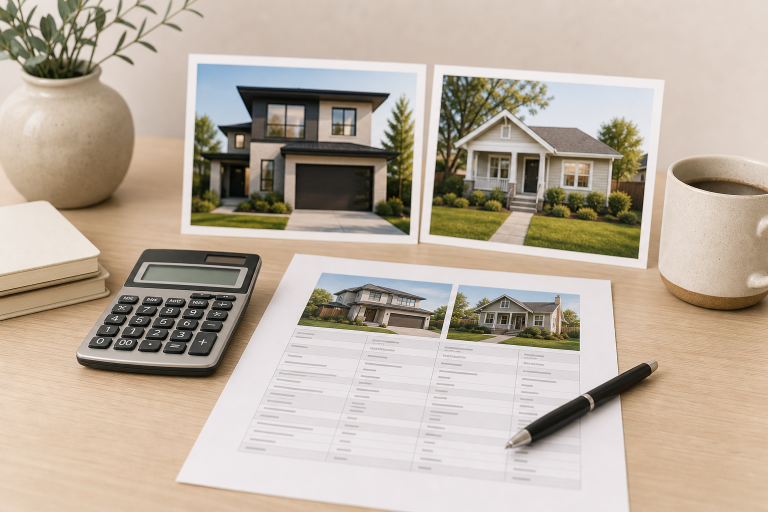
Build a Simple Home Comparison Scorecard
After each showing, score the home from one to five in the following categories and write a brief reason for every score:
- Affordability: Does the full monthly cost fit comfortably?
- Condition: Are major repairs likely soon?
- Location: Does the area work for daily life?
- Layout: Does the space meet current and future needs?
- Flexibility: Can the home adapt to work, guests, hobbies, or household changes?
- Resale appeal: Does it offer features that may appeal broadly to future buyers?
Choose the Home That Supports the Bigger Picture
The right Boulder-area home is rarely defined by one number or one dramatic feature. It is the property that brings together a manageable monthly cost, sound condition, practical location, comfortable layout, and realistic future options.
Comparing homes through that wider lens can make the decision clearer and reduce unpleasant surprises after closing.


